Live Calls
Live calls are shown as a single class of call outcome, indicating only that a live contact has been made with a called party (i.e. covering results, no results and reschedules).
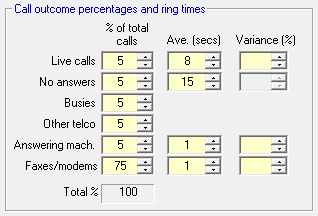
Fig. 1 - Call outcome percentages and ring times
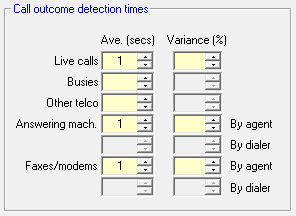
Fig. 2 - Call outcome detection times
 Ring and detection times
Ring time starts when the dialer or the agent first gets a response (e.g. ringing tone), to say that contact has been made. And it ends when the person called picks up the phone. If an agent is listening on the line, then no other detection is involved. The talk time for this call is then deemed to start immediately, even though the called party may not begin talking straight away.
If the call is still being handled by the dialer, then it may decide to do some detection work, on whether or not the call should be put through to an agent. To do this, it may use:
- live voice detection only
- detection for other call outcomes, but not including live calls
- all detection means available to it
In the case of an analogue connection, it will know little if anything at this stage about the type of call outcome, and may delay by a second or more, while it applies its detection algorithms to screen out everything but live calls.
In the case of a digital service (for example ISDN), it is likely to know whether a connect has been made at this point, and may put the call through to the agent directly, without doing any detection, especially if the incidence of machines is low.